




Starts at
Starts at
Trip Overview
The Choquequirao and Machu Picchu Trek is one of the strongest long routes in the Cusco region. It is made for hikers who want more than a classic trail, more than one archaeological site, and more than a comfortable path toward Machu Picchu.
This seven-day route links two major Inca places: Choquequirao and Machu Picchu. Between them, the trail crosses the Apurimac Canyon, dry valleys, cloud forest, high passes, remote farming areas, Salkantay views, coffee fields, railway-side paths, and finally Aguas Calientes.
This trek is not easy. The descents are long, the climbs are steep, the heat inside the canyon can feel heavy, and the high passes test both legs and mind. But that is also what makes the route feel so different. You move through places where few travelers go, and each day feels like a separate chapter.
With Machu Picchu Gol Travel, the trek is organized with professional guides, mule support, camp logistics, cooked meals, safety equipment, hotel in Aguas Calientes, Machu Picchu ticket coordination, train return, and transport back to Cusco.
Since this route includes Machu Picchu, booking early is strongly recommended. Entrance tickets, circuits, train schedules, and hotel rooms are subject to availability.
Tour at a Glance
Ends at
Ends at
Duration
Duration
From
US$ 100
Deposit
6%
Travel staff
Local Guide
Transport
by Bus
Accommodation
Accomodation
Departures
Daily Departures
Season
All year
Meals
1B, 1L, 1D
Physical level
Easy
Max altitude
15,090 feet (4,600 meters)
Sites to visit
Cusco, Soraypampa
Day by Day Schedule
Day highlight: First views of the Apurimac Canyon and the descent into a warmer valley.
The day begins with pickup from your hotel in Cusco. The drive to Capuliyoc takes several hours, moving from the city into rural Andean areas. After breakfast and a short orientation, you meet the trekking team and prepare for the first walking section.
From Capuliyoc, the trail begins with wide canyon views. The Apurimac River sits far below, and the land opens into dry slopes, cactus, birds, and warm air. If weather and luck allow, condors may be seen flying above the canyon.
The trail descends in long zigzags. This downhill section can feel hard on the knees, especially because the path is dry, dusty, and exposed to the sun. The heat can be strong during the day, so water and sun protection are important.
On the way, the group may stop at Cocamasana for views before continuing toward Chiquisca, a warmer oasis-like area in the canyon. Here, local families grow crops in a dry valley setting.
The evening is spent at camp with dinner and rest. The first day is a reminder that this trek is not only about distance; it is also about constant altitude change.
Technical details
- Meals: Breakfast, lunch, and dinner
- Accommodation: Camp
- Starting point: Capuliyoc, approx. 2,890 m / 9,482 ft
- Camp altitude: Chiquisca, approx. 1,900 m / 6,234 ft
- Difficulty: Moderate to challenging
- Trail type: Dry canyon trail, long descent, dusty zigzags, exposed sun sections
- Transport: Tourist transport from Cusco to Capuliyoc

Day highlight: The strong ascent from the Apurimac Valley to Marampata, with wide canyon views behind you.
The second day starts with breakfast at camp before descending toward Playa Rosalinas, located near the lower part of the valley. The trail reaches the bridge crossing area, where the route begins to climb again.
From the valley floor, the ascent toward Santa Rosa is demanding. The climb is hot, dry, and exposed, with switchbacks that can feel long under the sun. This is one of the first moments when the route asks for real mental strength.
In Santa Rosa, the group may stop near local farming areas. This zone is known for sugar cane and handmade local liquor production. After a break and lunch, the route continues climbing toward Marampata.
The final part of the day rewards the effort with views of snowcapped mountains, canyon walls, and the direction of Choquequirao. Marampata is a rural settlement with one of the best views of the route.
At sunset, the light can fall across the mountains and Choquequirao area. The night is spent at camp.
Technical details
- Meals: Breakfast, lunch, and dinner
- Accommodation: Camp
- Lowest point: Playa Rosalinas area
- Santa Rosa altitude: Approx. 1,970 m / 6,463 ft
- Camp altitude: Marampata, approx. 2,900 m / 9,514 ft
- Difficulty: Challenging
- Trail type: Canyon descent, bridge crossing, steep uphill switchbacks, dry exposed trail
- Key places: Playa Rosalinas, Santa Rosa, Marampata
Day highlight: Guided visit to Choquequirao and descent toward Pinchaunuyoc.
The day begins early, with the chance to see morning light over the Choquequirao area. After breakfast, the trail moves toward the archaeological complex.
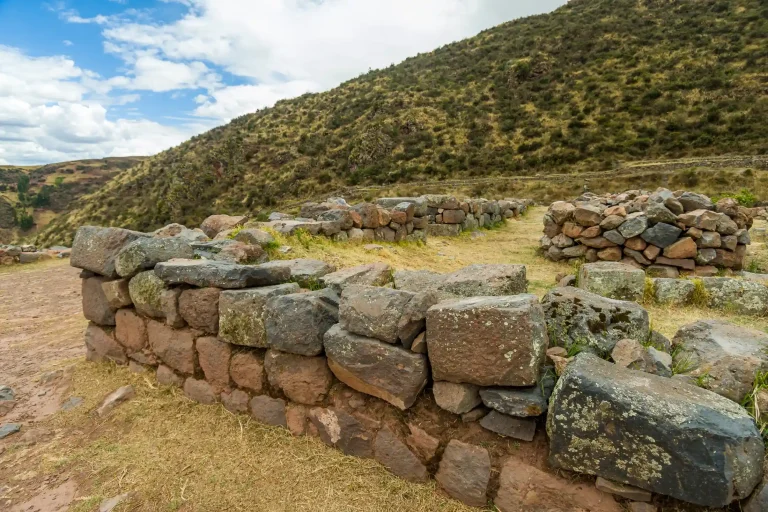
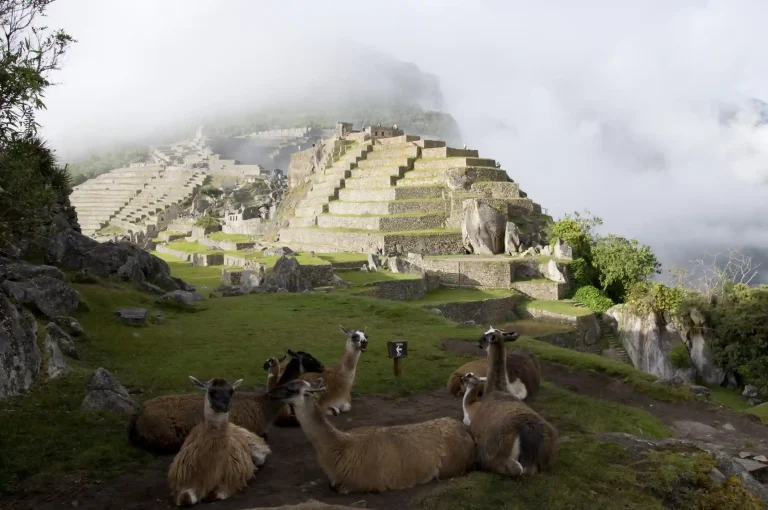
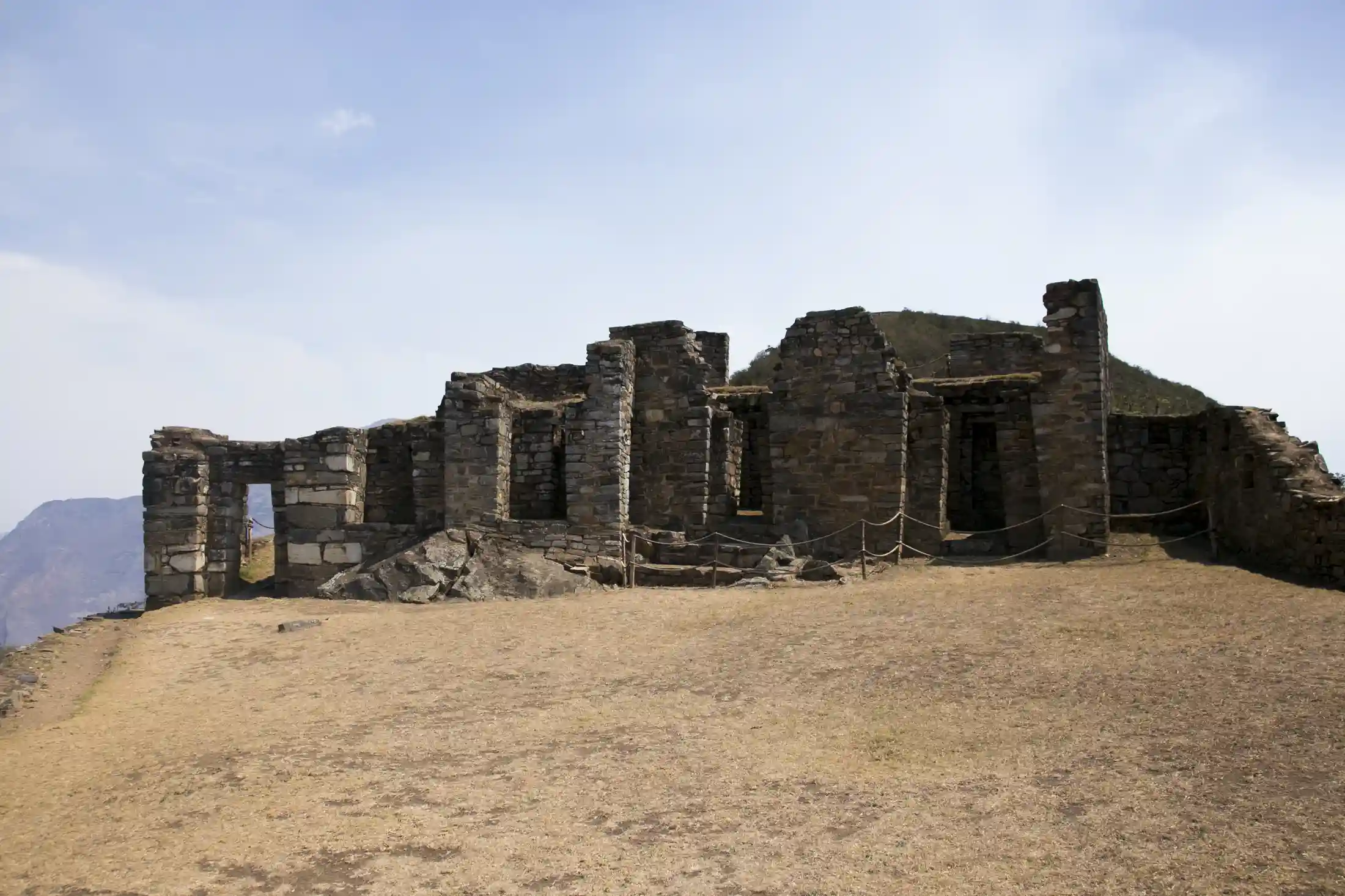
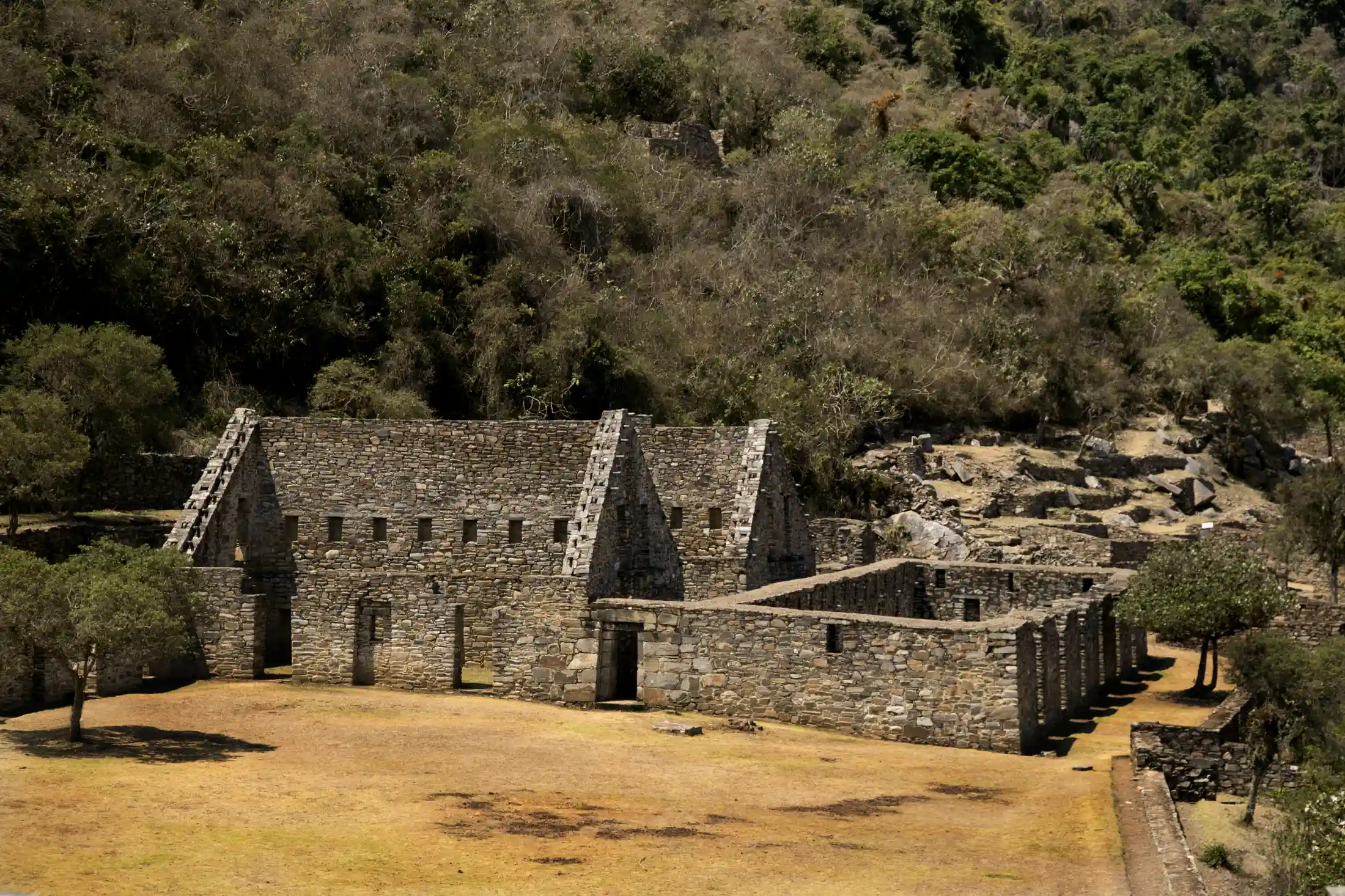
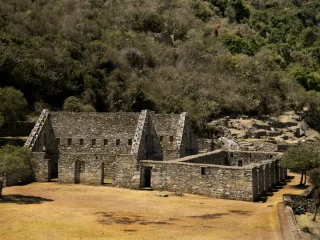
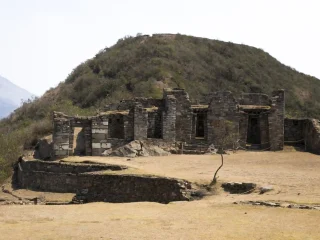
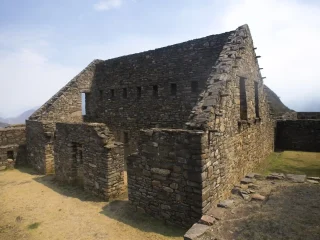
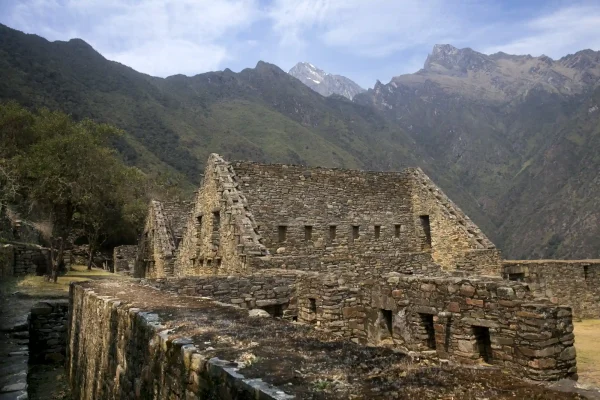
Choquequirao sits above the canyon, surrounded by mountains and cloud forest. The site is large, and only part of it is commonly reached by trekkers. Your guide explains the history of the place, its role in the Inca world, and why it is often described as a remote sister site to Machu Picchu.
During the visit, the group may walk through terraces, ceremonial areas, viewpoints, and sectors connected to the old layout of the complex. With some luck, condors may appear in the canyon sky.
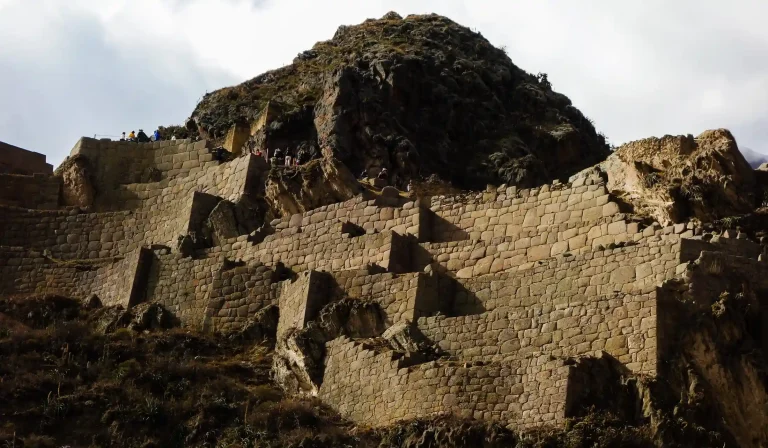
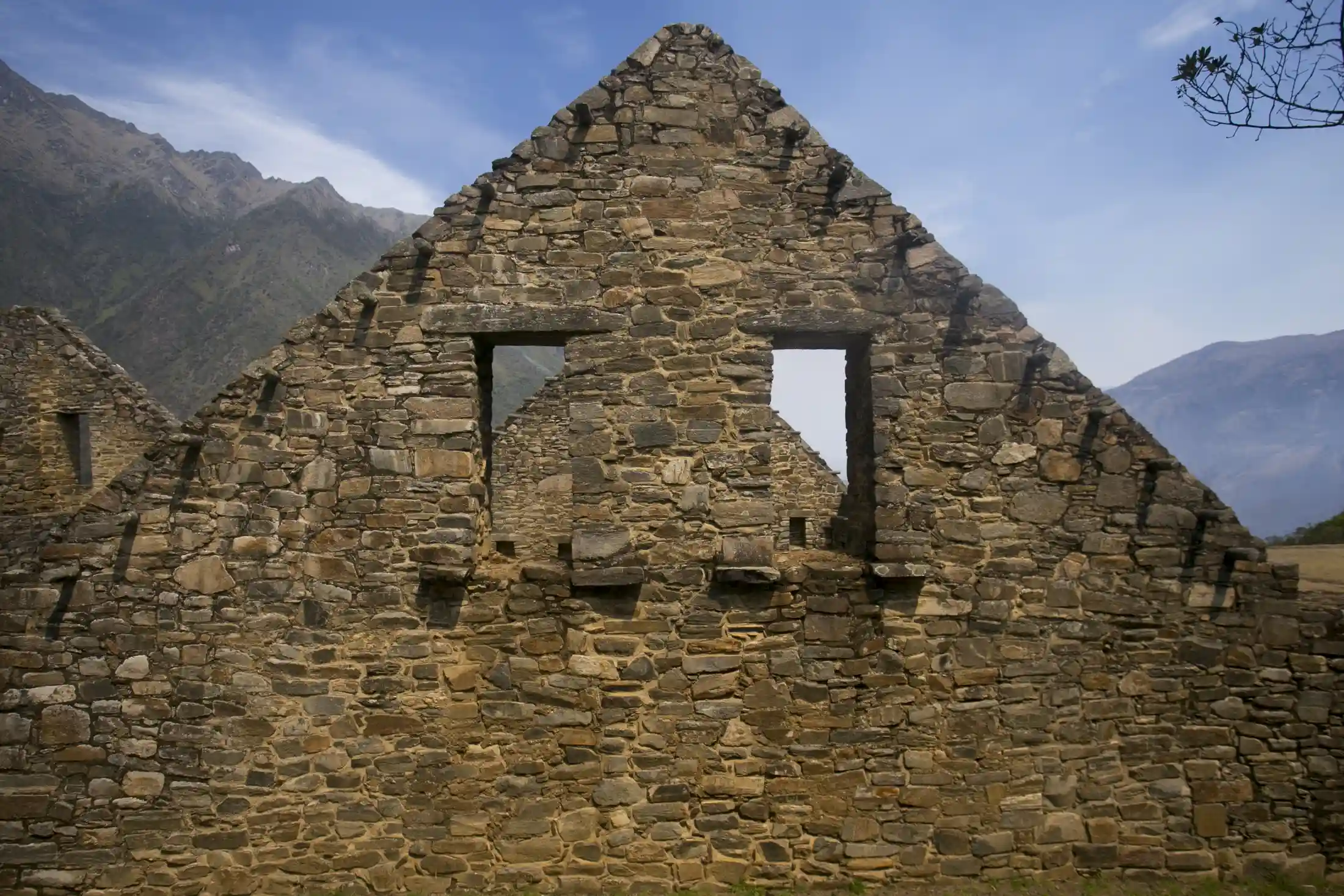
After lunch near the route, the trek continues upward toward Choquequirao Pass and then descends toward Pinchaunuyoc, another Inca-related site set above the Blanco River canyon. This section enters cloud forest and can include humid paths, vegetation, narrow trails, and slippery ground in rainy season.
The night is spent near Pinchaunuyoc, after a long and very meaningful day.
Technical details
- Meals: Breakfast, lunch, and dinner
- Accommodation: Camp
- Choquequirao Pass altitude: Approx. 3,270 m / 10,728 ft
- Pinchaunuyoc altitude: Approx. 2,420 m / 7,940 ft
- Difficulty: Challenging
- Trail type: Archaeological paths, cloud forest sections, uphill and downhill terrain, narrow paths
- Key sites: Choquequirao, Choquequirao Pass, Pinchaunuyoc
Day highlight: Crossing from the Blanco River canyon toward high Andean terrain through one of the hardest hiking days.
The day starts with breakfast before descending toward the Blanco River area. This part of the route moves through a different landscape, with birds, orchids, coca-growing areas, and humid canyon vegetation.
After crossing the river, the hardest climb of the trek begins. The route ascends toward Maizal, where lunch is served. The climb is steep and demanding, and the heat can make it feel even harder. Slow walking and steady breathing are important.
After lunch, the trail continues upward for several hours toward Minas Victoria, old Inca-related mine areas where silver was once extracted. The route then climbs toward San Juan Pass, located at around 4,200 m / 13,780 ft.
This section changes dramatically. The vegetation gives way to high Andean puna, ichu grass, colder wind, and mountain views. From the pass, you may see peaks such as Choquetacarpo and Padreyoc. Depending on the season, condors may be seen in the area.
The final section descends to Yanama, where camp is set in the valley. Dinner and rest come after one of the most demanding days of the full route.
Technical details
- Meals: Breakfast, lunch, and dinner
- Accommodation: Camp
- Maizal altitude: Approx. 3,000 m / 9,843 ft
- San Juan Pass altitude: Approx. 4,200 m / 13,780 ft
- Camp altitude: Yanama, approx. 3,600 m / 11,811 ft
- Difficulty: Strenuous
- Trail type: River descent, steep ascent, old mine route, high pass, puna grassland, long descent
- Key places: Blanco River, Maizal, Minas Victoria, San Juan Pass, Yanama
Day highlight: Reaching Yanama Pass, the highest point of the route, with first views toward the Salkantay region.
After breakfast, the route leaves Yanama and begins a long ascent toward Yanama Pass, the highest point of the trek at around 4,650 m / 15,256 ft.
The climb may take several hours and passes through rural farming areas where local families work with potatoes and other highland crops. Snowcapped mountains such as Saqsarayoc and Padreyoc may appear along the route, and, depending on the season, snow may be present near the pass.
The altitude makes this day demanding. The air is thin, the wind can be cold, and the trail can be wet, rocky, or muddy depending on weather.
From the pass, the group begins a long descent toward Totora. The landscape changes again as the route drops from high mountain terrain toward greener valleys. Lunch is served along the way, depending on timing and conditions.
Later, the route continues to Collpapampa, near the edge of the cloud forest. The night is spent in Mountain Sky View or similar accommodation, with dinner and rest after another long day.
Technical details
- Meals: Breakfast, lunch, and dinner
- Accommodation: Mountain Sky View or similar
- Highest altitude: Yanama Pass, approx. 4,650 m / 15,256 ft
- Camp/lodge area: Collpapampa
- Difficulty: Challenging to strenuous
- Trail type: Long ascent, high pass, rocky and muddy sections, long descent, changing climate
- Key places: Yanama, Yanama Pass, Totora, Collpapampa
Day highlight: The route moves into warmer cloud forest and finishes in Aguas Calientes, the base town of Machu Picchu.
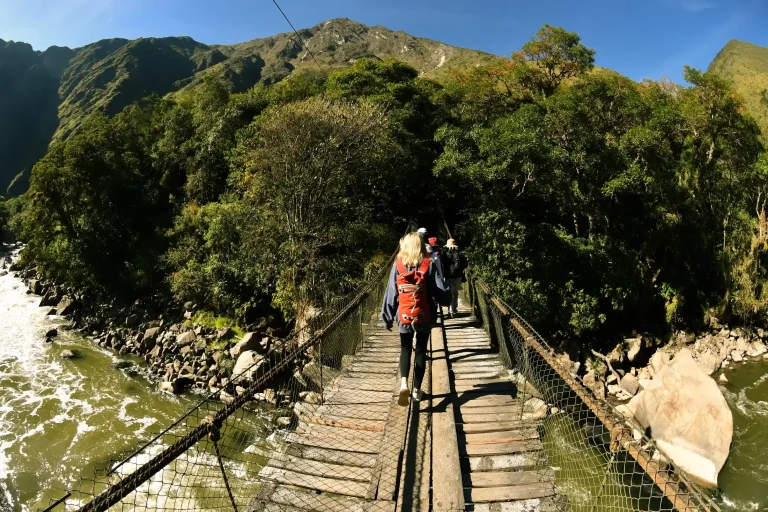
This is the final hiking day before Machu Picchu. After breakfast, the trail follows the Santa Teresa Valley through warmer, greener land. The route passes rivers, waterfalls, orchids, coffee, banana, and avocado plantations.
The ground can be humid, muddy, and slippery in rainy months. The descent is gentler than earlier days, but after five days of trekking, the body may still feel tired.
At the Granadilla area, private transport may take the group to La Playa to save energy and allow time for the coffee activity. In this area, travelers learn about local coffee production, from plant to roasting and brewing.
After lunch, transport continues toward Hidroelectrica. From here, the group usually walks along the railway toward Aguas Calientes. This section is mostly flat but long, warm, and humid. It follows the Urubamba River through dense vegetation.
Travelers who feel very tired may request the optional train from Hidroelectrica to Aguas Calientes. This has an extra cost and depends on availability.
In Aguas Calientes, the group checks into the hotel. Dinner is served in town, and the guide gives final instructions for Machu Picchu.
Technical details
- Meals: Breakfast, lunch, and dinner
- Accommodation: Hotel in Aguas Calientes
- Aguas Calientes altitude: Approx. 2,040 m / 6,693 ft
- Difficulty: Moderate to challenging
- Trail type: Cloud forest trail, humid paths, possible mud, railway-side walk
- Transport: Private transport on selected sections and optional train from Hidroelectrica to Aguas Calientes
Day highlight: Guided visit to Machu Picchu after six days through mountains, canyon, forest, and jungle.
The final day begins early in Aguas Calientes. After breakfast at the hotel, the group takes the bus up to Machu Picchu. The aim is to enter early, when the light is softer and the site feels calmer.
Inside Machu Picchu, your guide leads the group through the assigned official circuit. The route may include terraces, temples, stone structures, ceremonial spaces, water channels, and viewpoints, depending on ticket availability.
If you booked extra tickets for Huayna Picchu, Machu Picchu Mountain, or Huchuy Picchu, those hikes are done according to the assigned entrance time and official rules.
After the guided visit, the group returns to Aguas Calientes. Lunch is not included. Later, travelers board the train to Ollantaytambo, where tourist transport takes the group back to Cusco.
The trek ends with hotel or nearby drop-off, depending on street access.
Technical details
- Meals: Breakfast
- Machu Picchu altitude: Approx. 2,430 m / 7,972 ft
- Difficulty: Easy to moderate inside the site, depending on the assigned circuit
- Guided tour: Approx. 2 hours
- Optional hikes: Huayna Picchu, Machu Picchu Mountain, or Huchuy Picchu, only when booked in advance
- Transport: Bus to Machu Picchu, train to Ollantaytambo, tourist transport to Cusco
Inclusions
What’s Included
Permits and Entrance Tickets
- Entrance ticket for the Choquequirao trekking route
- Entrance ticket to Machu Picchu, subject to official availability
- Assigned Machu Picchu circuit according to ticket availability
- Route coordination before departure
Guide and Safety
- Professional English and Spanish-speaking guide
- Pre-departure briefing in Cusco
- First aid kit
- Emergency oxygen
- Basic altitude support
- Route management according to weather and safety conditions
- Communication support during the operation
- 24/7 customer support before the trek
Camping and Trekking Equipment
- Dining tent
- Kitchen tent
- Tables and chairs
- Cooking equipment
- Portable travel toilet
- Inflatable mattress
- Small sleeping pillow
- Foam mattress
- Backpack cover
- Duffle bag for personal belongings, maximum 5 kg / 11 lb
- Mule support for camp equipment and allowed luggage
Accommodation
- 5 nights in tents
- 1 night in Mountain Sky View or similar accommodation in Collpapampa
- 1 night in hotel in Aguas Calientes
- Shared accommodation in standard service
- Hotel room in Aguas Calientes with private bathroom, hot shower, and Wi-Fi depending on hotel operation
Meals
- 7 breakfasts
- 6 lunches
- 6 dinners
- Hot drinks at camp
- Wake-up tea in the morning
- Tea time before dinner
- Daily snacks during the route
- Boiled and treated water from the first lunch onward
- Cloth snack bag to reduce plastic waste
- Vegetarian, vegan, and special meal requests with advance notice
Transport
- Hotel pickup in Cusco
- Tourist transport from Cusco to Capuliyoc
- Transport support on selected route sections where included
- One-way bus ticket from Machu Picchu to Aguas Calientes on Day 7
- Train ticket from Aguas Calientes to Ollantaytambo
- Tourist transport from Ollantaytambo to Cusco
- Duffle bag transport during trekking days, maximum 5 kg / 11 lb
What’s Not Included
- Sleeping bag
- Trekking poles
- Huayna Picchu Mountain ticket
- Machu Picchu Mountain ticket
- Huchuy Picchu Mountain ticket
- Lunch in Aguas Calientes on Day 7
- Dinner in Cusco on Day 7
- Optional train from Hidroelectrica to Aguas Calientes
- Travel insurance
- Tips for guide, cook, muleteers, drivers, and support team
- Extra drinks or personal purchases
- Extra costs caused by weather, strikes, landslides, illness, train delays, government decisions, or force majeure
Recommendations
Months before the trek
- Train with long hikes, steep descents, uphill routes, and multi-day walking if possible.
- Break in your hiking boots before arriving in Peru.
- Book early because the route includes Machu Picchu tickets and train return.
- Send correct passport details at booking.
- Buy travel insurance that covers multi-day trekking and remote routes.
- Tell our reservations team about allergies, food restrictions, medical conditions, or special needs.
- Consider private service if you are traveling with children, older travelers, photographers, or anyone who may need a slower pace.
A few days before the trek
- Arrive in Cusco at least 2 or 3 days before the trek.
- Keep your first days in Cusco light so your body can adjust to altitude.
- Drink water often.
- Avoid heavy alcohol before the trek.
- Attend the briefing and ask practical questions.
- Pack warm layers for high camps and light clothing for hot canyon and jungle sections.
- Keep passport, money, medication, and valuables in your daypack.
- Pack your duffle carefully. The maximum allowed weight is 5 kg / 11 lb.
During the trek
- Walk at your own safe rhythm.
- Do not rush on canyon descents or steep climbs.
- Use trekking poles on long descents and uneven ground.
- Keep rain gear close, especially from November to March.
- Respect local communities, muleteers, animals, farms, water sources, and camps.
- Ask before taking close photos of local residents.
- Do not leave trash on the route.
- Carry small soles for drinks, bathrooms, snacks, or local purchases.
- Tell your guide immediately if you feel dizzy, weak, short of breath, or unwell.
- Stay mentally ready for heat, cold, altitude, long distances, insects, mud, and tired legs.
More Tour Information
- Tour name: Choquequirao and Machu Picchu Trek
- Duration: 7 days and 6 nights
- Starting point: Cusco
- Ending point: Cusco
- Main route: Cusco, Capuliyoc, Chiquisca, Playa Rosalinas, Santa Rosa, Marampata, Choquequirao, Pinchaunuyoc, Maizal, Minas Victoria, San Juan Pass, Yanama, Yanama Pass, Totora, Collpapampa, Playa Sahuayaco, Hidroelectrica, Aguas Calientes, Machu Picchu
- Accommodation: Camps, mountain lodge, and hotel in Aguas Calientes
- Maximum altitude: Yanama Pass, approx. 4,650 m / 15,256 ft
- Machu Picchu altitude: Approx. 2,430 m / 7,972 ft
- Total walking distance: Approx. 89 km / 55.2 mi
- Difficulty: Challenging to strenuous
- Group size: Up to 12 travelers
- Meals included: 7 breakfasts, 6 lunches, and 6 dinners
- Guide: Professional English and Spanish-speaking guide
- Duffle bag: Included, maximum 5 kg / 11 lb
- Transport: Tourist transport from Cusco to Capuliyoc and return transport after the train
- Train: Aguas Calientes to Ollantaytambo
- Best for: Experienced hikers or strong travelers who want a remote multi-day route
- Recommended acclimatization: 2 to 3 days in Cusco before the trek
- Recommended booking time: 3 to 6 months in advance because the route includes Machu Picchu
- Best season: April to October for more stable weather
- Rainy season: Mainly November to March
- Not operated: February may be restricted due to rain risk and route conditions
- Walk one of the longest and most demanding trekking routes connecting Choquequirao with Machu Picchu.
- Reach Choquequirao, an impressive Inca site built above the Apurimac Canyon.
- Cross the Apurimac Canyon, one of the deepest canyon systems in the Americas.
- Hike through changing climates: dry canyon, cloud forest, high Andes, puna grassland, and warmer jungle areas.
- Visit smaller archaeological areas such as Pinchaunuyoc and old Inca-related route sections.
- Cross demanding passes such as San Juan Pass and Yanama Pass, with high mountain views.
- See remote rural areas where local families still work with farming, animals, and mountain life.
- Reach the Salkantay region and descend toward Collpapampa, Santa Teresa Valley, Hidroelectrica, and Aguas Calientes.
- Finish with a guided visit to Machu Picchu after several days of walking through little-used routes.
- Travel with Machu Picchu Gol Travel, a Cusco-based team focused on strong logistics, local guides, mountain food, safe operation, and respect for local communities.
Hotel pickup
Pickup is usually from hotels located in Cusco city. Some streets in the historic center are narrow, steep, or closed to vehicles. If your hotel or Airbnb has difficult access, we may coordinate a nearby meeting point.
The exact pickup time is confirmed during the briefing. Traffic and access conditions in Cusco can cause small variations.
Luggage storage
You can leave your main luggage at your hotel or at our office while you are on the trek. Bring only what you need for the route.
Do not leave valuables inside stored luggage. Passport, money, cards, cameras, medication, and electronics should stay with you.
Duffle bag
You will receive a duffle bag before the trek. Mules will carry your allowed luggage together with camp equipment and food supplies.
The standard weight limit is 5 kg / 11 lb. You will not have access to the duffle during the walking day because the mule team moves ahead to prepare the next camp.
Carry daily essentials in your own daypack: passport, jacket, rain gear, water, snacks, sunscreen, insect repellent, camera, medication, and personal items.
Payment conditions
A deposit is required to secure Choquequirao route logistics, Machu Picchu tickets, trains, accommodation, transport, guide, mule team, meals, and camp equipment.
The remaining balance should be paid before the trek according to the instructions from our reservations team. Cash payments in Cusco may avoid online transaction fees. Card or online payments may include gateway fees.
These conditions exist because route permits, Machu Picchu tickets, trains, camps, hotel rooms, food supplies, guides, cooks, muleteers, and transport must be arranged before departure.
Return from Machu Picchu to Cusco
After the Machu Picchu guided tour, the group returns to Aguas Calientes. Lunch is not included.
Later, you board the train to Ollantaytambo. You should be at the station at least 30 minutes before departure. The train ride usually takes around 1 hour and 45 minutes.
At Ollantaytambo station, our representative meets you for the transfer back to Cusco. The drive usually takes around 1 hour and 30 minutes to 2 hours, depending on traffic.
Availability
This route includes Machu Picchu, so availability depends on Machu Picchu entrance tickets, circuits, train schedules, hotel rooms, guide availability, camp logistics, and mule team coordination.
Booking 3 to 6 months in advance is strongly recommended, especially during high season.
Last-minute bookings may be possible only if all services are available, but they should not be assumed. For late bookings, Machu Picchu Gol Travel will offer the best available ticket circuit and train schedule.
If the preferred Machu Picchu circuit is unavailable, we will offer the best available alternative. Each traveler can choose only one Machu Picchu circuit included in the tour. Specific circuit requests should be made before booking and are subject to official availability.
Machu Picchu Circuits
Machu Picchu entrance is organized by official circuits and routes. The route assigned depends on availability at the time of booking.
For this trek, the included ticket usually aims for the best available option. If Circuit 2 is available, it may be arranged because it offers a broader route through the citadel. If Circuit 2 is not available, alternatives such as Circuit 3-B or Circuit 1-B may be used according to official availability.
Travelers must follow the route printed on the ticket and cannot change circuits once inside the site.
Trains to Machu Picchu
This tour includes the return train from Aguas Calientes to Ollantaytambo on Day 7.
Train schedules are subject to availability, season, and railway operation. The return train is usually a standard tourist service, with Vistadome upgrade available for an extra cost when spaces are available.
Large luggage should stay in Cusco. Bring only what you need for the trek and one hotel night in Aguas Calientes.
Accommodation
Camps during the trek
Most nights are spent in tents along the route. These are remote mountain and canyon camps, not hotel nights.
Camp service includes tents, dining space, kitchen equipment, portable toilet support, sleeping mats, and meals prepared during the route.
Mountain Sky View or similar accommodation
One night is spent in Collpapampa at Mountain Sky View or similar accommodation. This gives travelers more comfort after several demanding trekking days, with better rest before the final route toward Aguas Calientes.
Hotel in Aguas Calientes
The final night is in a hotel in Aguas Calientes. Rooms are usually double, matrimonial, or triple, depending on booking.
The hotel includes private bathroom, hot shower, and Wi-Fi depending on the property and local service conditions. Single room or hotel upgrades may be arranged for an extra cost.
Transport Included
- Tourist transport from Cusco to Capuliyoc
- Transport support on selected route sections where included
- Bus from Machu Picchu to Aguas Calientes on Day 7
- Train from Aguas Calientes to Ollantaytambo
- Tourist transport from Ollantaytambo to Cusco
- Mule transport for allowed duffle weight and camp gear
Transport times may vary due to traffic, weather, road conditions, strikes, landslides, or train operation changes.
Altitude and Acclimatization
The highest point of this route is Yanama Pass, at around 4,650 m / 15,256 ft.
Spending 2 or 3 days in Cusco before the trek helps your body adapt. Drink water, avoid alcohol, eat light, and rest well before departure.
Possible altitude symptoms include headache, dizziness, nausea, unusual tiredness, shortness of breath, or loss of appetite. If symptoms appear during the trek, inform your guide right away.
Terrain During the Route
The route combines many types of terrain:
- Dry canyon trails
- Long zigzag descents
- Steep uphill climbs
- River crossings
- Cloud forest paths
- Old Inca-related trail sections
- Rocky high passes
- Puna grassland
- Mud in rainy months
- Railway-side walk from Hidroelectrica to Aguas Calientes
Trekking poles are strongly recommended because of the long descents and steep climbs.
Flora and Fauna on the Route
The Choquequirao and Machu Picchu route crosses dry canyon, cloud forest, high Andes, and jungle-edge zones.
Depending on altitude and season, travelers may see orchids, bromeliads, mosses, ichu grass, coca plants, coffee plants, bananas, avocados, and other local crops.
Wildlife may include condors, hummingbirds, highland birds, insects, butterflies, llamas, alpacas, horses, mules, and, in some zones, the Andean cock-of-the-rock.
Climate
This trek crosses several climates. The Apurimac Canyon can be hot and dry during the day. Higher passes can be cold and windy. Cloud forest and jungle sections can be humid, rainy, and muddy.
Rain is more common from November to March. The drier season from April to October usually offers better visibility, but cold nights are still expected at higher camps.
Travelers should prepare for sun, heat, wind, cold, rain, mud, and insects.
Travel Restrictions
Strikes and demonstrations
Strikes and demonstrations are common in Peru and may interrupt some tours. Roads can be blocked, and train services may be affected. When this happens, we will try to keep your trip as close as possible to the original plan, even if this means leaving earlier than scheduled.
In some cases, tours may be changed or canceled. Any change will be coordinated by our operations team. Safety comes first, and decisions will be made to protect travelers and staff.
Lost objects
Please check your belongings whenever leaving transport, camps, lodges, hotels, restaurants, trains, buses, or rest areas. You are responsible for your personal items during the tour.
Keep passport, money, cards, medication, electronics, and cameras with you at all times.
Health and physical condition
The Choquequirao and Machu Picchu Trek is a challenging to strenuous route. It includes long walking days, steep canyon descents, demanding climbs, high passes, hot lower valleys, cold mountain nights, humid jungle sections, and a total distance of around 89 km / 55.2 mi.
Travelers should be in strong physical condition. Older travelers, people with heart conditions, respiratory issues, recent injuries, pregnancy, or other medical concerns should speak with their doctor before booking.
Altitude sickness, heat exhaustion, dehydration, knee pain, blisters, and fatigue can affect travelers on this route. Arriving in Cusco at least 2 or 3 days before the trek helps reduce altitude risk.
Enquire Now
Ready to book the Choquequirao and Machu Picchu Trek 7 Days with Machu Picchu Gol Travel?
Send us your travel date, number of travelers, passport details, hotel location in Cusco, and any special request. Our reservations team will check Machu Picchu ticket availability, guide assignment, mule support, camp logistics, hotel options, train schedules, and full route operation.
Essential documents and money
- Original valid passport
- Student card, if applying for a discount
- Travel insurance information
- Cash in Peruvian soles
- Credit or debit card
- Copy of passport saved offline
- Emergency contact information
Clothing
- Waterproof hiking boots
- Light shoes or sandals for camp
- Trekking pants
- Thermal pants
- Shorts
- Long-sleeve shirts
- Warm jacket
- Waterproof jacket
- Rain poncho
- Warm gloves
- Sun hat
- Wool hat
- Neck gaiter or buff
- Trekking socks
- Sunglasses with UV protection
- Sleepwear for camp nights
Personal gear
- Medium daypack, 15 to 25 liters
- Sleeping bag, if not renting
- Trekking poles, if not renting
- Water bottle or CamelBak, 2-liter capacity recommended
- Headlamp or flashlight
- Power bank
- Camera and charger
- Small dry bag or plastic bags for wet clothes
- Snacks such as energy bars, chocolate, dried fruit, or candies
- Towel
- Bathing suit, if you plan to use hot springs in Aguas Calientes
Health and personal care
- Personal medication
- Altitude medication, only if approved by your doctor
- Sunblock, SPF 50 or higher
- Insect repellent
- Lip balm with sun protection
- Personal hygiene items
- Hand sanitizer
- Blister care
- Small personal first aid items
- Electrolytes or hydration salts
Special requirements
Travelers with special requirements must inform our reservations team in advance. This includes mobility aids, medical equipment, professional photo or video equipment, service animals, special diet tools, or any condition that may affect the route.
Machu Picchu Gol Travel is a Cusco-based travel agency operating long treks and tours across Peru. Our service focuses on safe logistics, trained local guides, fair work with local staff, clear communication, and careful support before and during the route.
The Choquequirao and Machu Picchu route passes through areas linked to Capuliyoc, Chiquisca, Playa Rosalinas, Santa Rosa, Marampata, Choquequirao, Pinchaunuyoc, Maizal, Yanama, Collpapampa, Hidroelectrica, Aguas Calientes, and Machu Picchu. These places include rural communities, farming families, muleteers, cooks, drivers, guides, and people who live from mountain work and tourism.
Our commitment is to run the route with respect for these local communities and the land they depend on. Tourism in remote areas should support local work, protect the trail, and avoid unnecessary damage to camps, water sources, and archaeological places.
For this trek, equipment matters. The route includes hot canyon descents, steep climbs, high passes, cold nights, cloud forest, humid jungle sections, and a final hotel night in Aguas Calientes. We organize camp equipment, kitchen support, dining areas, duffle transport, mule support, safety items, and clear route planning.
Food is also essential. A seven-day trek requires balanced meals, warm drinks, snacks, and enough energy for long walking days. Our kitchen team prepares mountain meals with attention to hygiene and dietary needs. Vegetarian, vegan, and special meal requests can be arranged with advance notice. In private service, meal planning can be more personal and may involve an extra cost depending on the request.
Traveling with Machu Picchu Gol Travel means walking with a local team that understands the canyon, the high passes, the camp rhythm, the Machu Picchu ticket system, train timing, and the details that help a long route run properly.
Require More Information
Contact Us
Let our local experts help you choose the perfect Peruvian adventure.
Traveler Reviews